Own the plan
A printed sheet handed down to you is somebody else's plan. Naming your own goal, in your own words, is what turns it into yours. Back on the court by September beats any protocol.
Physiotherapy and rehabilitation for people who want their body back, whether that means walking without pain or getting back on the court. Fifty years in movement, and still competing.
Fourteen years old on a judo mat to a competition floor at seventy plus. The body of work behind the body of work.
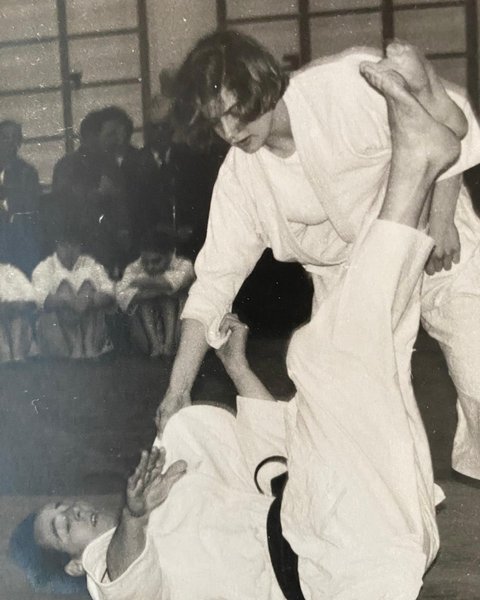
1969
Fourteen years old, demonstrating with her instructor in Soesterberg.
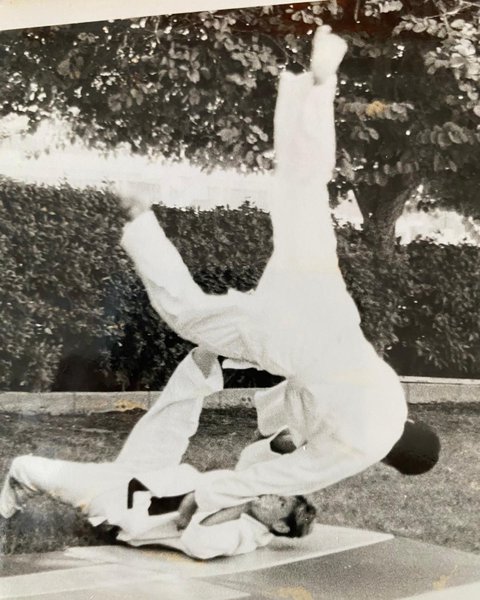
The same years
A judo sacrifice throw.
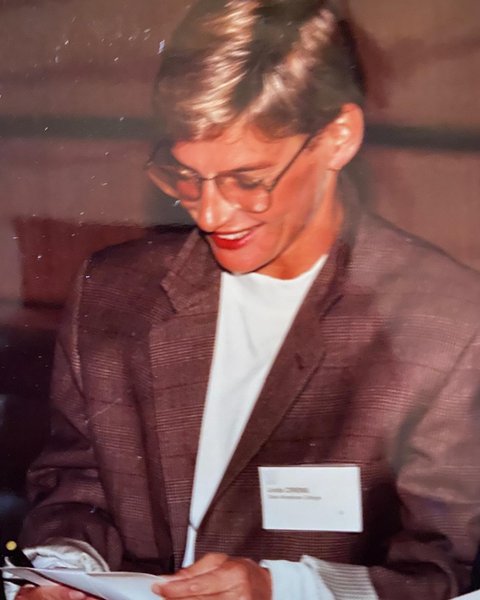
Chairman
European Council for the International Schools' Physical Education Section.
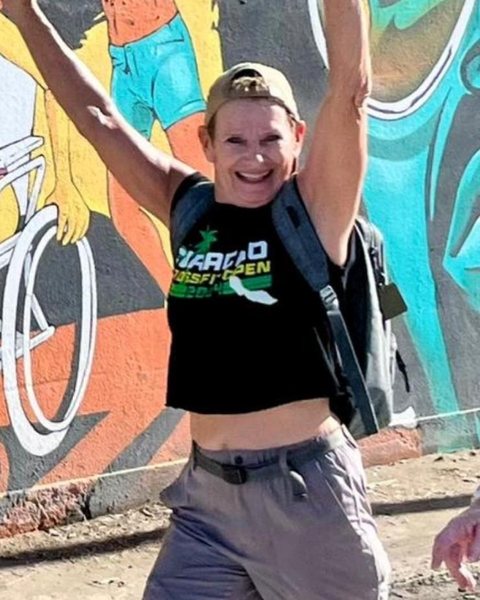
Now
CrossFit Open, seventy plus division. Still the same person on the mat.
Ask her what actually makes rehabilitation fail and she does not say picking the wrong exercise. She says consistency. Getting someone to keep doing the thing that is already working.
A printed sheet handed down to you is somebody else's plan. Naming your own goal, in your own words, is what turns it into yours. Back on the court by September beats any protocol.
Range of motion. A load you could not shift three weeks ago. A sit to stand count. Encouragement is an opinion. A number is evidence, and it is the cheapest motivation there is.
Physiotherapists spend as much time holding back the eager as chasing the reluctant. The eager ones are often the costlier mistake, because a setback costs them faith in a program that was working.
Written with Francis de Windt, a physician specialized in internal medicine and endocrinology. She sees what a consultation room misses. He sees what a treatment table misses. Every number here is traceable to a published paper.
A 35-year-old with a standing desk, heavy squats and a marathon block arrives with low back pain she cannot explain. The tissue that may be billing her for all of it is a sheet most people have never heard of: the thoracolumbar fascia.
Estrogen and muscleThirty-one women did an identical programme, half of them wearing an estrogen patch. Their quadriceps grew nearly twice as much. Then the strength tests came back and there was almost nothing between the groups.
Frozen shoulderForty people, all given the same hands-on treatment. Half then strengthened the shoulder, half trained control instead. The ones who trained control ended with less pain and ten degrees more rotation.
MotivationTwo patients, same injury, same protocol. One recovers, one stops in week three. A study of 335 adults found the difference is not discipline, and that guilt actively cancels out the benefit of enjoying it.
Falls and balanceBalance gets trained as if it were a separate skill. In 33 young men, leg extension strength predicted reaching distance so closely that the two stopped looking like separate qualities at all.
Knee painIt is on every athlete you see, and most explanations of it are nonsense. One small EMG study found something real and much narrower than the marketing claims: a change in timing.
Bone after menopauseForty-seven women lifted three times a week for a year, half of them also taking a cheap white powder. The hip lost about a third as much bone. The spine, which everyone expected to respond, did nothing at all.
Shoulder painIt is richly wired for pain at the top and almost bare below, which explains a great deal. Twenty-nine international experts agreed on how to treat it, and agreed even more firmly on which machines to switch off.
Knee injuryIt is the most commonly injured ligament in the knee, four times more common than the one everyone worries about, and it repairs itself. Then researchers checked the rehabilitation evidence and found two thirds of it predates the year 2000.
Knee painPain at the outside of the knee was blamed for decades on a band sawing across the bone and inflaming a small sac of fluid. Then somebody dissected fifteen cadavers looking for the sac and found no trace of it in any of them.
Strength after sixtyEighteen women in their sixties lifted for twelve weeks, half on five grams a day. Training volume rose 164 percent, strength and muscle went with it, and the scale did not move at all.
The ageing brainBrain volume falls about 5 percent per decade after forty, and the insulation on the wiring degrades from a similar age. Both slow the loop that keeps you upright, which is why strength alone is only half the answer.
The series continues. Each piece starts from a real paper, states what it found, and then says plainly where the evidence runs out and clinical judgement takes over.
Every article here is built by two people from opposite ends of the same problem. She was his physiotherapist for years before she was his colleague. The arrangement is simple: she brings the movement and the rehabilitation, he brings the physiology and the pharmacology, and neither of them signs off on a piece the other disagrees with. He practices in Spain and she practices in Curacao. This is a writing partnership across an ocean, not a shared clinic.
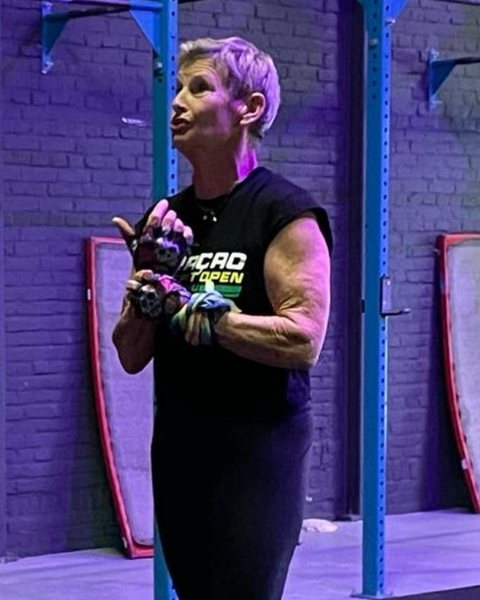
She began as a physical education teacher in 1976 and has been working with bodies ever since, across Curacao, the Netherlands, Greece, Egypt and Dubai, including eighteen years at Cairo American College. In 1999 she went back to school and qualified as a physiotherapist, and she has practiced in Curacao since 2006.
She holds a coaching degree from the Dutch Judo Federation and has coached track and field, volleyball, soccer, gymnastics, fencing and judo. She competes in the 70+ division at CrossFit, and has done since 2016, entirely because she wanted to.
CrossFit Open, 70+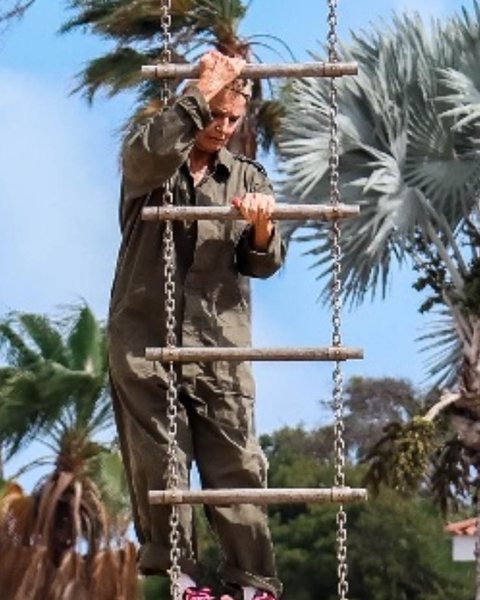 Obstacle course, Curacao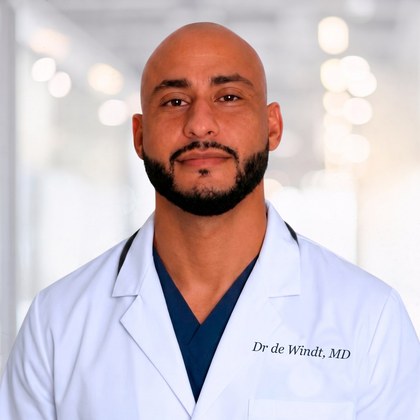
He qualified in medicine in Costa Rica, spent six years as a general practitioner in Curacao, then completed specialist training in Spain in both Internal Medicine and Endocrinology and Nutrition. He runs a specialist endocrinology and internal medicine practice on the Costa del Sol, where his clinical work is metabolic disease, diabetes, obesity, nutrition, body composition and endocrine disorders.
He is also the reason this collaboration exists. He arrived on her treatment table as a competitive grappler with an injury, repeatedly, for years. He is a Brazilian jiu jitsu black belt, awarded 6 September 2024, a two-time ADCC open champion at Professional Masters level, silver at the first ADCC European Open, and a bronze medallist at the IBJJF European No-Gi Championship. Rather a lot of that was rehabilitated by the other author on this page.
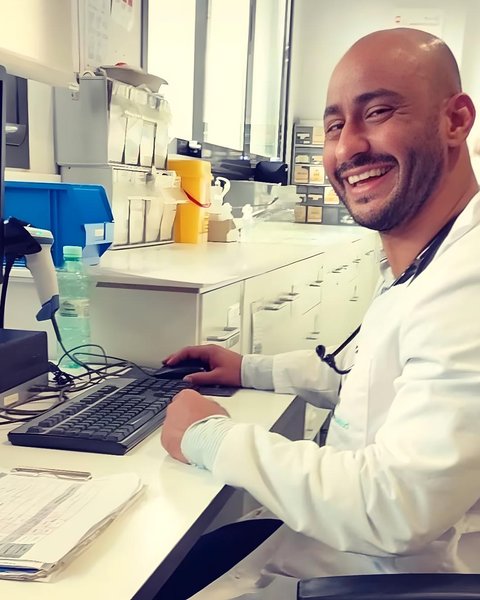 In the clinic
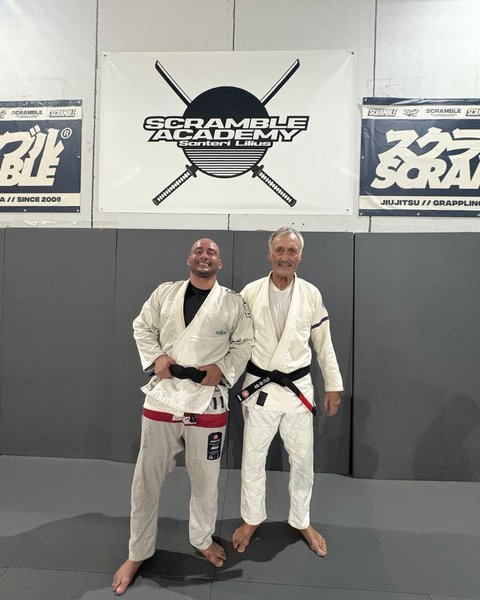 Black belt, 2024
His side of the work
His specialist practice in Internal Medicine and Endocrinology on the Costa del Sol. Hormones, metabolic health, body composition and the measurements that sit underneath all of it.
Education, womenHis independent education project on what happens to hormones through perimenopause and after it. Bone, muscle, sleep, mood, and the treatments that do and do not have evidence behind them. Nothing is sold on it.
Somewhere in that list is the reason you came.
If you would rather ask than read, ask. Email reaches her directly, in Dutch or English.
ehmcpoublon@gmail.comShe started as a physical education teacher in 1976 and has been working with bodies ever since. Curacao, then Arnhem, then Thessaloniki, then eighteen years at Cairo American College. Along the way she coached track and field, volleyball, soccer, gymnastics, fencing and judo, and took a coaching degree from the Dutch Judo Federation. She was chairman of the European Council for the International Schools' Physical Education Section.
Judo started early and stayed. At fourteen she was already demonstrating with her instructor on a mat in Soesterberg, in 1969, and the throws she was practicing then, including the sacrifice throw, are still part of what she coached and what she brings to a treatment room now.
In 1999 she went back to school. A sabbatical in Amsterdam turned into a BA in Physical Therapy at the HVA, and from 2001 she practiced physiotherapy in Cairo, then Dubai, then Curacao. Since 2020 she has worked with the Dutch Ministry of Defense and the Coast Guard.
The other things on her record are, in their own way, the point. A single engine pilot license in 1978. A solo skydiving certificate in 1995. A trek through Mustang in the Himalayas in 2015. CrossFit since 2016, entirely because she wanted to, aging up through the divisions as she went: 60+, then 65+, now 70+.
She never needed a study to tell her that people keep doing what they enjoy. She has been demonstrating it on a competition floor every year since 2018.
Obstacle course, Curacao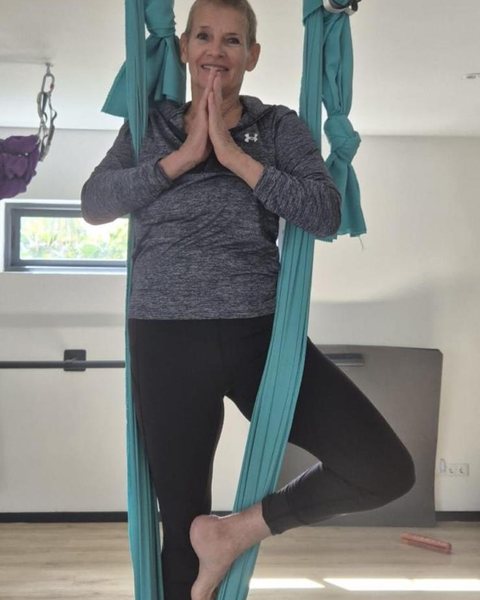 Aerial yoga
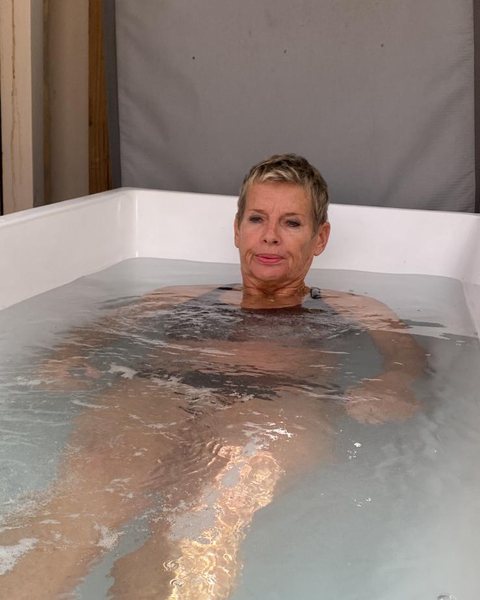 Cold plungeCrossFit Open, 70+ division
For rehabilitation, injury recovery, or a second opinion on a plan that is not working. Email is the way to reach her, and it reaches her directly.
ehmcpoublon@gmail.comWillemstad, Curacao. Dutch and English.